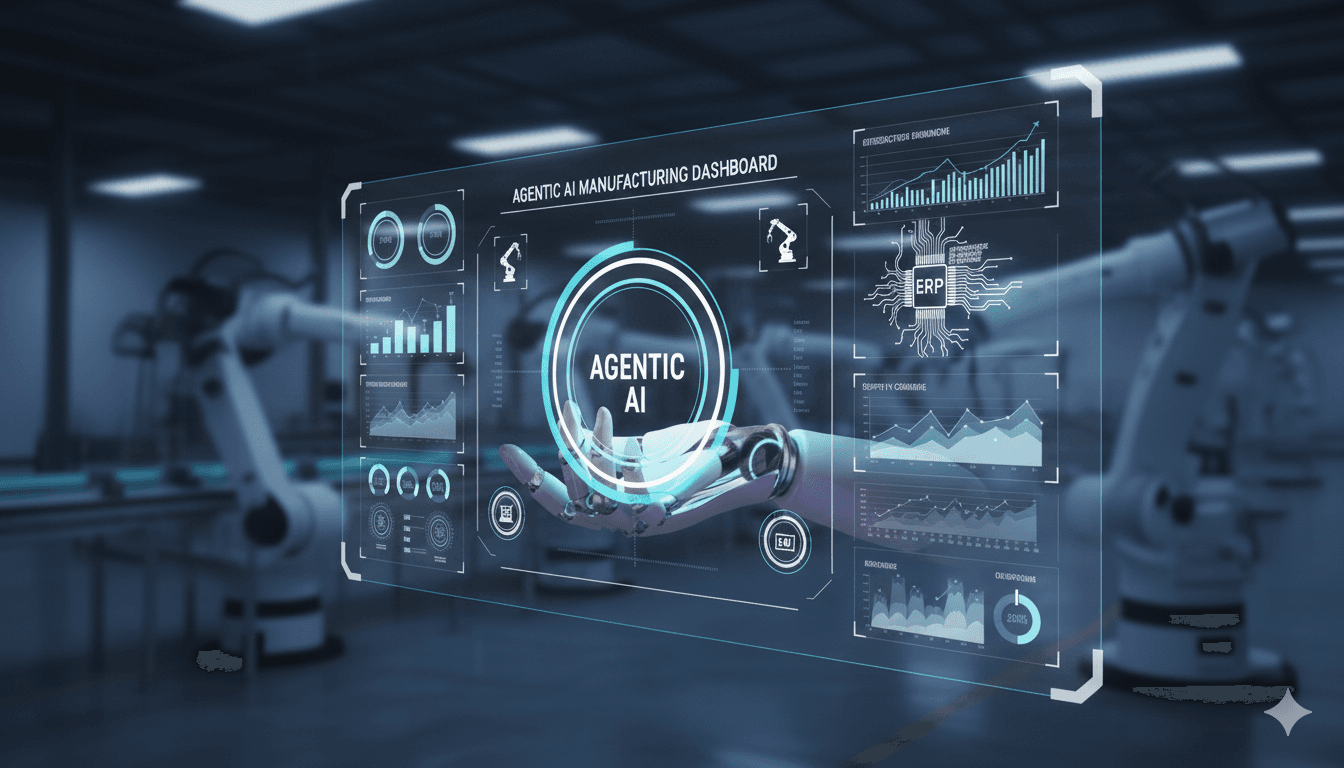
How Agentic AI Is Redefining Manufacturing Dashboards and Decision-Making
Explore how Agentic AI is redefining manufacturing dashboards with real-time insights, AI-generated reports, and smarter decision-making through modern ERP platforms.

Author
Amol Thite
Published
Feb 6, 2026
Last updated
Feb 26, 2026
Agentic AI represents a significant shift in how intelligence is applied inside enterprise systems. Unlike traditional AI models that respond only to user queries, Agentic AI operates continuously and proactively.
Why Traditional Manufacturing Dashboards Fall Short
For decades, manufacturing dashboards have been treated as reporting tools rather than decision-making systems. They were designed to show historical data such as daily output, inventory balances, machine utilisation, and order status. While this information is useful, it often arrives too late to influence outcomes.
In most factories, dashboards are manually configured. Teams decide in advance which KPIs to track, build charts around them, and refresh reports at fixed intervals. This rigid structure works only when operations are predictable. In reality, manufacturing environments are constantly changing, and static dashboards struggle to reflect what actually matters at any given moment.
As operations scale, dashboards become cluttered. Teams add more metrics in an attempt to gain visibility, but the result is information overload rather than clarity. Operators see numbers without context, managers chase explanations, and leaders rely on secondary analysis instead of real-time insight.
According to a 2025 Deloitte manufacturing technology survey, nearly 60 percent of manufacturing leaders report that their dashboards provide visibility but fail to support timely decisions. The problem is not lack of data. It is the lack of intelligence applied to that data.
This gap is driving the shift away from static dashboards toward intelligent, AI-driven dashboards that understand operational context and support action, not just observation.
What Are AI-Generated Dashboards in Manufacturing ERP?
AI-generated dashboards are dynamic dashboards created automatically by an ERP system using real-time operational data. Instead of relying on predefined KPIs and manual configuration, the system determines what information is most relevant at that moment and presents it accordingly.
In a manufacturing ERP environment, AI-generated dashboards continuously adapt. If production flow is smooth, the dashboard highlights efficiency and throughput. If a delay or risk emerges, the dashboard shifts focus to bottlenecks, root causes, and impacted orders.
These dashboards are not static screens. They are living views of operations that evolve as conditions change. This makes them especially valuable in complex manufacturing environments where priorities shift throughout the day.
AI-generated dashboards also reduce dependence on data specialists. Teams no longer need to wait for reports to be built or modified. Insights are delivered automatically, in real time, and in a format that is easy to understand.
Agentic AI: Moving Dashboards From Visibility to Action
Agentic AI represents a significant shift in how intelligence is applied inside enterprise systems. Unlike traditional AI models that respond only to user queries, Agentic AI operates continuously and proactively.
In manufacturing ERP systems, Agentic AI monitors workflows, understands dependencies, and identifies potential issues before they become visible through standard reports. It does not simply display information. It interprets it.
This proactive behaviour changes the role of dashboards entirely. Instead of asking users to search for problems, the system highlights what requires attention and why.
For example, Agentic AI can:
- Detect early signs of production delays
- Identify inventory consumption trends that signal future shortages
- Flag quality deviations while work is still in progress
- Surface risks that could impact dispatch commitments
According to McKinsey, organisations using AI-assisted decision systems experience up to 30 percent faster decision cycles. In manufacturing, faster decisions directly reduce downtime, rework, and missed deliveries.
From Manual Reports to Self-Generating Insights
One of the most time-consuming activities in manufacturing operations is reporting. Teams spend hours pulling data from multiple systems, validating numbers, and creating presentations. This manual effort delays insights and introduces errors.
Agentic AI eliminates much of this effort by generating insights automatically. Dashboards and reports are created based on live data and current operational context, without manual intervention.
Instead of reviewing dozens of metrics, teams receive focused insights that explain what is happening and what might happen next. This shift allows teams to move from analysis to execution much faster.
Why Custom Dashboards Matter in Manufacturing
Manufacturing operations vary widely across industries, plants, and even production lines. A dashboard that works for one factory may be irrelevant for another. Fixed dashboards fail because they assume uniform priorities.
Modern manufacturing ERP platforms use AI to generate customised dashboards based on role, responsibility, and operational context. Instead of designing dashboards manually, users receive views tailored to their needs.
For example:
- Operators see live task status and machine flow
- Production managers see bottlenecks and schedule risks
- Quality teams see inspection trends and deviations
- Leadership sees cross-plant performance and systemic risks
This dynamic customisation ensures that every user sees relevant information without noise or overload.
Natural Language Interaction Makes Data Accessible
One of the most transformative aspects of Agentic AI is natural language interaction. Instead of navigating complex dashboards, users can ask simple questions and receive clear answers.
Examples include:
- “Why is today’s production behind schedule?”
- “Which orders are at risk of missing dispatch?”
- “What caused the quality failure in this batch?”
This conversational interface removes the need for technical expertise and encourages broader adoption of data-driven decision-making across the organisation.
According to Gartner, by 2026, over 70 percent of enterprise users are expected to interact with analytics through conversational interfaces. Manufacturing ERP platforms are increasingly adopting this approach to improve usability.
Real-Time Dashboards Enable Real-Time Decisions
Traditional dashboards rely on delayed or batch-updated data. This delay limits their usefulness in fast-moving manufacturing environments.
Real-time dashboards powered by Agentic AI allow teams to act while work is still in progress. Issues are identified early, and corrective actions can be taken before delays cascade across operations.
PwC reports that organisations with real-time analytics capabilities are 2.8 times more likely to make faster and more accurate decisions. In manufacturing, this directly improves throughput and delivery performance.
Reducing Cognitive Load for Operational Teams
Manufacturing teams operate under constant pressure. When dashboards present too much information, they increase cognitive load instead of reducing it.
Agentic AI simplifies dashboards by filtering noise and highlighting what matters most. Instead of overwhelming users with data, the system prioritises insights based on urgency and impact.
This design improves focus, reduces decision fatigue, and enables teams to respond more effectively to operational challenges.
Security and Governance in AI-Driven Dashboards
As dashboards become more intelligent, security and governance become critical. AI-driven insights must respect permission boundaries and organisational controls.
Modern manufacturing ERP platforms ensure this by embedding:
- Role-based dashboard access
- Approval-driven visibility
- Complete audit trails
- Secure AI permission layers
According to Deloitte, 67 percent of manufacturing leaders consider data governance essential when adopting AI systems. Secure design builds trust and accelerates adoption.
Traditional Dashboards vs AI-Driven Dashboards
Traditional dashboards show what happened. AI-driven dashboards explain why it happened and what to do next.
Traditional dashboards require manual setup. AI-driven dashboards generate insights automatically.
This shift defines the future of operational intelligence in manufacturing.
The Future of Manufacturing Dashboards
Manufacturing dashboards are undergoing a fundamental shift. What were once static displays of historical performance are now evolving into intelligent decision-support systems that actively participate in daily operations. Traditional dashboards were designed to show what happened. The next generation of dashboards is designed to help decide what should happen next.
As Agentic AI becomes more deeply embedded within modern ERP platforms, dashboards are no longer limited to fixed KPIs or predefined views. They continuously adapt based on live operational data, changing priorities, and real-world conditions on the shop floor. This adaptability allows dashboards to surface the most relevant insights at the right time, without requiring manual configuration or constant monitoring.
In the near future, manufacturing dashboards will move beyond visualisation entirely. They will play an active role in execution by highlighting risks, triggering workflows, and supporting corrective actions while work is still in progress. Instead of reacting to delays or issues after they occur, teams will be able to anticipate problems and respond proactively.
These intelligent dashboards will also reduce uncertainty across operations. By connecting data across inventory, production, quality, and dispatch, they provide aினர் single, trusted view of reality. Teams will spend less time reconciling numbers and more time acting on clear, consistent insights.
Manufacturers that adopt AI-driven dashboards gain more than operational visibility. They gain clarity in complex environments, speed in decision-making, and control over increasingly interconnected operations. This capability becomes especially critical as manufacturing scales across plants, geographies, and supply chains.
Conclusion
The future of manufacturing belongs to organisations that can move faster than complexity. As operations become more dynamic and data volumes grow, traditional dashboards and manual reporting methods are no longer sufficient. Manufacturers need systems that do more than display information. They need systems that understand context, guide action, and support execution in real time.
AI-driven dashboards powered by Agentic AI represent this next evolution. They transform ERP platforms from passive reporting tools into active operational partners. By reducing manual effort, improving responsiveness, and providing clear, actionable insights, these dashboards enable manufacturing teams to stay ahead of challenges instead of reacting to them.
For manufacturers looking to build resilient, scalable operations, intelligent dashboards are no longer optional. They are becoming a foundational capability for sustained performance and long-term growth.
Frequently Asked Questions: AI-Driven Dashboards in Manufacturing
What makes AI-generated dashboards different from traditional dashboards? AI-generated dashboards adapt dynamically based on real-time data and operational context, rather than relying on fixed metrics.
How does Agentic AI improve decision-making? Agentic AI proactively analyses workflows, identifies risks, and suggests actions without waiting for user queries.
Are AI-driven dashboards suitable for all manufacturing sizes? Yes. They scale from small plants to multi-location enterprises by adapting to operational complexity.
Do AI dashboards replace human judgment? No. They support human decision-making by reducing noise and highlighting what matters.
Did you find this blog helpful? Share it with others who might benefit!
Loading link...
Why Traditional Manufacturing ERP Systems Fail at Scale and How Modern Platforms Fix It
Previous Blog PostReal-Time Manufacturing Intelligence: Why Execution Speed Matters More Than Reports
Next Blog PostRelated Blogs
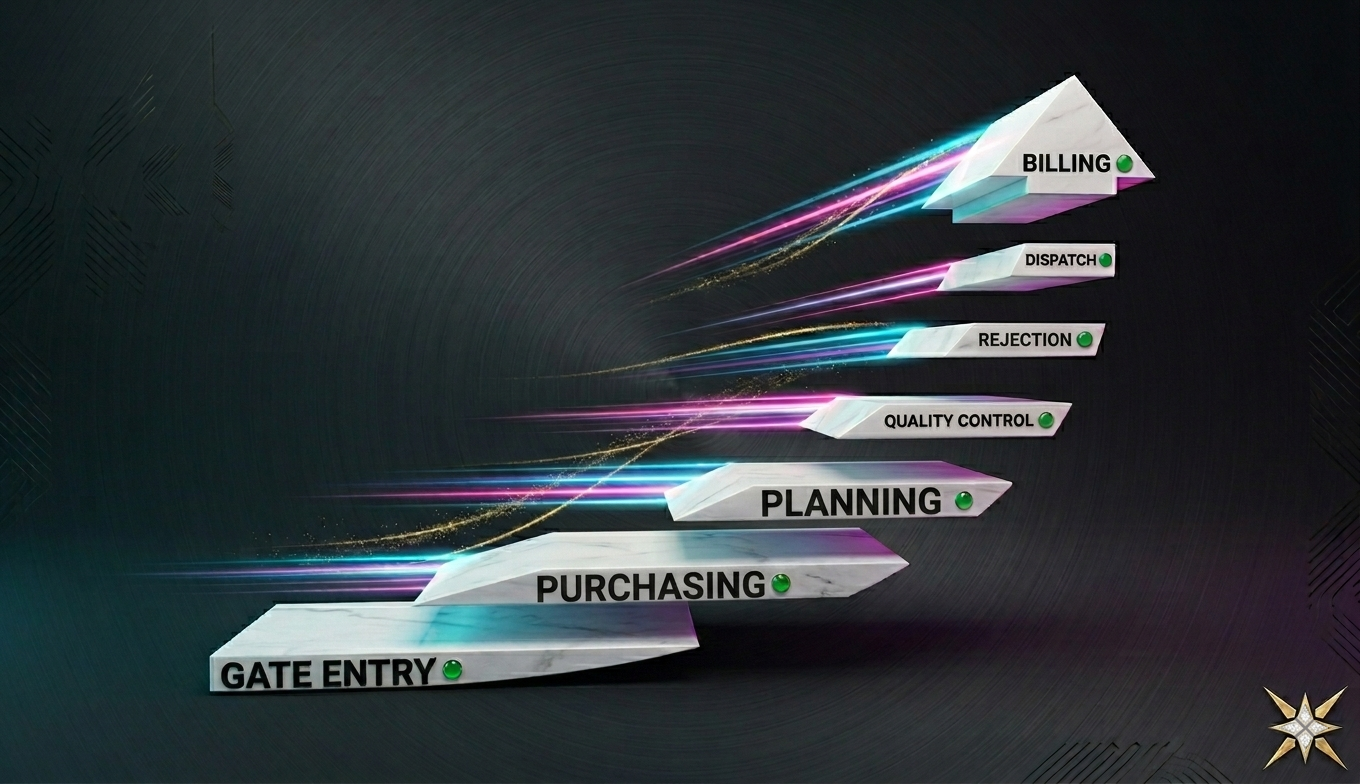
Syncrra ERP: Control Manufacturing From Gate Entry to Billing in Real Time
Discover how Syncrra unifies manufacturing execution from gate entry to billing using real-time workflows, built-in intelligence, and audit-ready traceability.
 By Prachi Bhalerao
Why Manufacturing ERP Fails at Execution and How Syncrra Fixes It
Syncrra redefines manufacturing ERP with workflow-driven execution, real-time visibility, and Agentic AI that helps teams act faster and stay in control.
 By Shekhar Gadekar
How AI-Driven ERP Is Transforming Manufacturing Operations in 2026
Discover how AI-driven ERP systems are transforming manufacturing in 2026 with real-time visibility, workflow automation, AI-generated dashboards, and Agentic AI insights.
 By Nisha Mane